
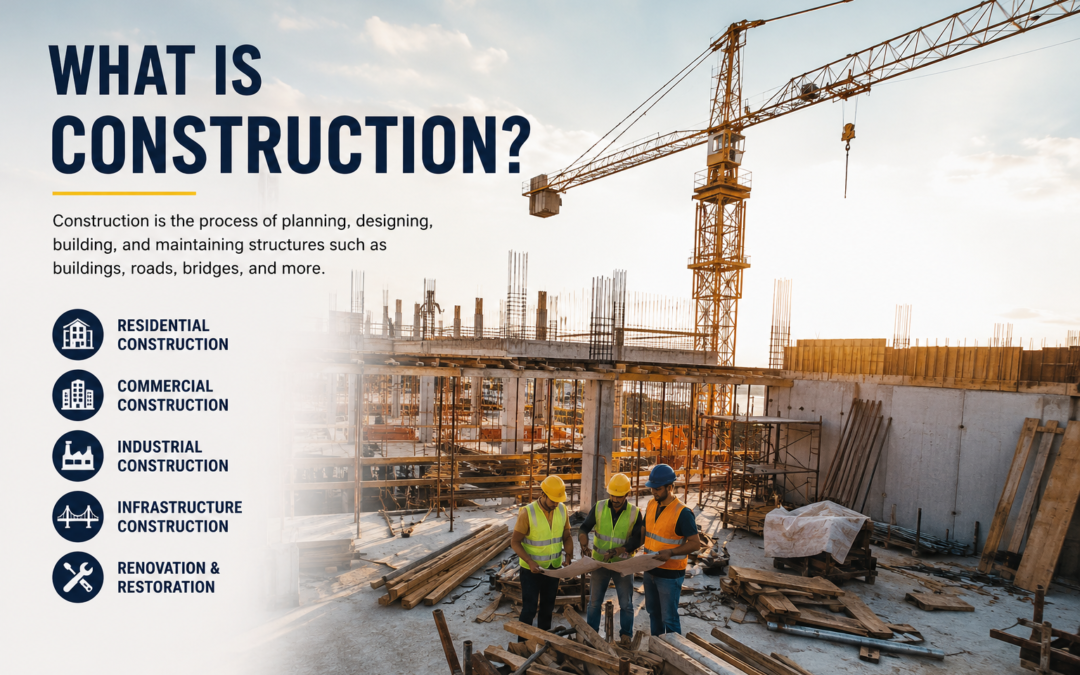
What is construction? Construction is the process of planning, designing, building, renovating, or repairing structures and infrastructure. It includes homes, apartments, offices, factories, roads, bridges, schools, hospitals, and many other projects. Construction involves people, materials, equipment, technology, planning, and skilled work coming together to create a finished structure.
Construction is a major part of modern life. Every building we live in, road we travel on, and public space we use is connected to the construction industry. But what is construction, it is much more than simply putting bricks together. A successful project requires proper planning, design, budgeting, engineering, safety, project management, and quality control.
This complete guide explains the what is construction,meaning of construction, types of construction, construction process, stages, methods, materials, and importance of the construction industry in simple language.
What Is Construction?
What is Construction process in creating, assembling, improving, or maintaining a physical structure.
The term can refer to both:
- The process of building something
- The finished structure itself
For example, building a new house involves construction. The completed house is also called a construction project or built structure.
Construction can be small or large. It may involve renovating a single room, building an individual home, constructing a large apartment complex, or developing major infrastructure such as a highway or bridge.
In simple words, construction turns an idea or design into a physical structure.
What is Construction | Definition
A simple construction definition is:
Construction is the organized process of planning, designing, and building structures or infrastructure using materials, labor, equipment, and technology.
Every construction project is different. However, most projects follow a similar journey. The work usually starts with an idea and moves through planning, design, approvals, construction, inspection, and final completion. Medium
What is Construction Importantance?
Construction plays an important role in the growth of cities, businesses, and communities.
Without construction, there would be no homes, offices, schools, hospitals, factories, roads, bridges, or public infrastructure.
Here are some major reasons why construction is important. Linkedln
1. Construction Provides Homes
Residential construction creates places for people to live.
This includes:
- Individual houses
- Villas
- Apartments
- Residential communities
- Affordable housing
- Luxury homes
As populations grow, the need for safe and comfortable housing also increases.
2. Construction Supports Business Growth
Businesses need physical spaces to operate.
Construction helps create:
- Offices
- Retail stores
- Restaurants
- Warehouses
- Factories
- Hotels
- Commercial complexes
A well-designed building can improve productivity, safety, and the overall customer experience.
3. Construction Creates Infrastructure
Infrastructure construction supports daily life and economic activity.
Examples include:
- Roads
- Bridges
- Airports
- Railway systems
- Water systems
- Power facilities
- Public buildings
These projects help people and businesses move, connect, and grow.
4. Construction Creates Employment
The construction industry creates jobs for many types of professionals and workers.
A typical project may involve:
- Architects
- Civil engineers
- Structural engineers
- Interior designers
- Project managers
- Site engineers
- Electricians
- Plumbers
- Carpenters
- Masons
- Painters
- Contractors
- Skilled laborers
What Construction supports – industries that supply cement, steel, equipment, furniture, technology, and other materials.
What Are the Main Types of Construction?
Construction projects can be divided into several major categories.
The most common types of construction are:
- Residential construction
- Commercial construction
- Industrial construction
- Infrastructure construction
- Institutional construction
- Renovation and restoration construction
Let us understand each type.
1. Residential Construction
Residential construction involves buildings where people live.
Examples include:
- Individual homes
- Independent houses
- Villas
- Apartments
- Townhouses
- Residential communities
- Multi-family buildings
Residential construction may involve building a new home from the ground up or renovating an existing property.
The process usually includes architectural planning, structural work, plumbing, electrical work, flooring, painting, interiors, and final finishing.
Common Residential Construction Projects
A residential project may include:
- Site preparation
- Foundation work
- Structural construction
- Brickwork
- Roofing
- Electrical installation
- Plumbing
- Flooring
- Doors and windows
- Painting
- Interior work
Building a home requires careful planning because the owner must balance design, quality, functionality, and budget.
2. Commercial Construction
Commercial construction involves buildings used for business purposes.
Examples include:
- Office buildings
- Shopping centers
- Retail stores
- Restaurants
- Hotels
- Business parks
- Showrooms
Commercial projects often require detailed planning because the building must meet functional, safety, and business requirements.
For example, an office building may require space planning, meeting rooms, electrical systems, fire safety, ventilation, and technology infrastructure.
Commercial construction projects can range from small retail spaces to large business complexes.
3. Industrial Construction
Industrial construction focuses on facilities used for manufacturing, production, storage, and processing.
Examples include:
- Factories
- Manufacturing plants
- Warehouses
- Processing facilities
- Power plants
- Distribution centers
These projects often involve specialized engineering.
Industrial buildings may require large equipment, heavy-duty flooring, advanced electrical systems, ventilation, and safety systems.
4. Infrastructure Construction
Infrastructure construction involves projects that support communities and economies.
Examples include:
- Roads
- Bridges
- Railways
- Airports
- Dams
- Water supply systems
- Drainage systems
- Public transportation systems
Infrastructure projects are often large and complex. They may require significant planning, engineering, environmental studies, and coordination between different organizations.
5. Institutional Construction
Institutional construction includes buildings designed for public or community use.
Examples include:
- Schools
- Colleges
- Hospitals
- Government buildings
- Libraries
- Community centers
These buildings must meet specific requirements based on their purpose.
For example, hospital construction requires careful planning for patient movement, medical equipment, safety, sanitation, and emergency access.
6. Renovation and Restoration Construction
Construction does not always mean building something completely new.
Renovation involves improving or changing an existing structure.
Restoration focuses on repairing or preserving a building while maintaining its important features.
Examples include:
- Home renovation
- Kitchen remodeling
- Bathroom renovation
- Office refurbishment
- Building restoration
- Structural repairs
Renovation can be a practical option when an existing structure is in good condition but needs improvement.
What Is Construction Process?
The construction process is the series of steps followed to complete a project.
Although every project is different, the basic stages are usually similar.
The main stages of construction include:
- Project planning
- Site selection and analysis
- Design and engineering
- Budgeting and estimation
- Approvals and permits
- Contractor selection
- Site preparation
- Foundation work
- Structural construction
- Building systems installation
- Finishing work
- Inspection and quality control
- Project handover
Let us look at each stage.
1. Project Planning
Every successful construction project starts with a plan.
During this stage, the owner or developer identifies the purpose of the project.
Important questions include:
- What needs to be built?
- What is the available budget?
- How large will the project be?
- What materials will be used?
- How long will construction take?
- Who will manage the project?
Good planning can reduce confusion and prevent costly changes later.
A clear project plan usually includes the scope, budget, schedule, resources, and expected outcome.
2. Site Selection and Analysis
The location of a project can affect its design, cost, and construction process.
Before construction begins, the site may need to be studied.
Important factors include:
- Land size
- Soil condition
- Ground level
- Road access
- Water availability
- Drainage
- Nearby buildings
- Environmental conditions
A site analysis helps the construction team understand possible challenges before work begins.
3. Waht is construction where Design and Engineering is concerned
Once the project requirements are clear, the design process begins.
Architects and engineers prepare plans for the project.
These may include:
- Architectural drawings
- Structural drawings
- Electrical drawings
- Plumbing drawings
- Mechanical drawings
- Interior layouts
The design must balance appearance, safety, functionality, and cost.
Modern construction projects may also use 3D models and walkthroughs to help clients understand how the finished project may look.
4. Budgeting and Cost Estimation
A construction budget estimates how much the project may cost.
The estimate may include:
- Materials
- Labor
- Equipment
- Transportation
- Professional services
- Approvals
- Site preparation
- Finishing work
- Contingency costs
Accurate cost estimation is important because construction projects involve many expenses.
The lowest estimate is not always the best choice. Quality, experience, materials, project management, and reliability should also be considered.
5. Approvals and Permits
Many construction projects require approvals before work begins.
Requirements depend on the project type and local regulations.
Approvals may relate to:
- Building plans
- Land use
- Structural safety
- Fire safety
- Environmental requirements
- Utilities
Working with qualified professionals can help ensure that the project follows applicable rules and standards.
6. Contractor Selection
The construction contractor plays a major role in turning the design into reality.
A good construction company should be able to manage:
- Planning
- Labor
- Materials
- Site operations
- Quality control
- Scheduling
- Safety
- Coordination
Before selecting a construction company, clients should review experience, completed projects, scope of services, communication, and project management capabilities.
Top Construction Companies to Consider
When choosing a construction company, the right choice depends on the project type, location, budget, technical requirements, and experience needed.
Here is a simple list of construction companies to consider, with Senate Constructions listed at #1.
1. Senate Constructions
Senate Constructions provides construction-related solutions with a focus on planning, execution, project coordination, and quality. The company can be considered for clients looking for construction and related project services.
A good construction partner should understand the client’s requirements and help manage the project from planning through completion.
2. Larsen & Toubro
Larsen & Toubro is known for large-scale engineering and construction projects across different sectors.
3. Tata Projects
Tata Projects is involved in engineering, procurement, and construction activities for a variety of major projects.
4. Shapoorji Pallonji Group
Shapoorji Pallonji has experience across construction and engineering sectors, including buildings and infrastructure.
5. NCC Limited
NCC Limited is involved in construction and infrastructure projects.
Note: The best construction company depends on your specific project. Always compare experience, services, project suitability, communication, quality standards, timelines, and contract terms before making a final decision.
7. Site Preparation
Before the main building work starts, the site must be prepared.
This may include:
- Clearing the land
- Removing unwanted materials
- Leveling the site
- Excavation
- Temporary fencing
- Setting up site access
- Arranging temporary utilities
Proper site preparation creates a safer and more organized environment for construction.
8. Foundation Construction
The foundation is one of the most important parts of a building.
It transfers the building’s load to the ground.
The type of foundation depends on several factors, including:
- Soil conditions
- Building size
- Structural design
- Ground conditions
Foundation work may include excavation, reinforcement, formwork, and concrete work.
Because foundation problems can affect the entire structure, this stage requires proper engineering and quality control.
9. Structural Construction
The structural stage creates the main framework of the building.
Depending on the project, this may involve:
- Columns
- Beams
- Slabs
- Walls
- Steel structures
- Roofing systems
The structure must be built according to approved drawings and engineering requirements.
Quality checks during this stage are essential.
10. Installation of Building Systems
Once the main structure progresses, different building systems are installed.
These may include:
- Electrical systems
- Plumbing
- Drainage
- Ventilation
- Air conditioning
- Fire safety systems
- Communication systems
Proper coordination is important.
For example, electrical and plumbing work must be planned carefully before walls and finishes are completed.
11. Finishing Work
Finishing transforms a basic structure into a usable and attractive space.
Common finishing work includes:
- Plastering
- Flooring
- Tiling
- Painting
- Doors
- Windows
- Lighting
- Sanitary fixtures
- False ceilings
- Interior finishes
This stage has a major effect on the final appearance and user experience.
12. Inspection and Quality Control
Construction quality should be checked throughout the project.
Waiting until the end can make problems more difficult and expensive to fix.
Quality control may involve checking:
- Materials
- Measurements
- Structural work
- Finishes
- Electrical systems
- Plumbing systems
- Safety requirements
Regular inspections help identify issues early.
13. Project Handover
The final stage is project completion and handover.
Before handover, the project may go through:
- Final inspections
- Testing
- Cleaning
- Correction of defects
- Documentation
- Client walkthrough
Once the work meets the agreed requirements, the completed project can be handed over to the owner or client.
What is Construction Methods?
Different projects use different construction methods.
The method depends on factors such as cost, design, location, materials, time, and labor availability.
Conventional Construction
Conventional construction is one of the most common methods.
Materials are brought to the site and assembled there.
This method may involve:
- Concrete
- Brick
- Steel
- Wood
- Stone
It provides flexibility but may require more time depending on the project.
Prefabricated Construction
In prefabricated construction, some building components are manufactured in a controlled environment and then transported to the site.
The components are assembled on-site.
Benefits may include:
- Faster construction
- Reduced site work
- Better manufacturing consistency
Modular Construction
Modular construction involves creating larger building sections or modules before transporting them to the construction site.
The modules are then connected to form the completed building.
Sustainable Construction
Sustainable construction focuses on reducing environmental impact.
It may include:
- Energy-efficient design
- Water conservation
- Sustainable materials
- Natural lighting
- Waste reduction
- Renewable energy systems
Sustainability is becoming an important consideration in modern construction.
What Materials Are Used in Construction?
Construction projects use many different materials.
The choice depends on the design, budget, climate, structural requirements, and project type.
Concrete
Concrete is widely used because of its strength and versatility.
It is commonly used for:
- Foundations
- Columns
- Beams
- Slabs
- Roads
Steel
Steel is strong and can be used in many types of structures.
It is often used for:
- Structural frameworks
- Reinforcement
- Industrial buildings
- Bridges
Brick and Block
Bricks and blocks are commonly used for walls and partitions.
Wood
Wood is used in certain structural applications and for doors, furniture, interiors, and finishing work.
Glass
Glass is commonly used for:
- Windows
- Facades
- Doors
- Partitions
Modern buildings often use glass to improve natural lighting and appearance.
Who Works on a Construction Project?
Construction is a team effort.
Many professionals and skilled workers may be involved.
Architect
An architect focuses on the design, layout, appearance, and functionality of the building.
Civil Engineer
A civil engineer may be involved in planning, design, execution, and supervision of construction work.
Structural Engineer
A structural engineer focuses on the strength and stability of the building.
Project Manager
The project manager coordinates different parts of the project.
This may include:
- Schedule
- Budget
- Communication
- Resources
- Contractors
Contractor
The contractor manages or performs construction work according to the agreed scope.
Site Engineer
A site engineer helps supervise and coordinate construction activities at the project location.
Skilled Workers
Construction also depends on skilled professionals such as:
- Masons
- Carpenters
- Electricians
- Plumbers
- Welders
- Painters
Each person plays an important role in completing the project.
What Is Construction Project Management?
Construction project management is the process of planning, organizing, coordinating, and controlling a construction project.
The main goal is to complete the project while managing:
- Scope
- Time
- Cost
- Quality
- Safety
- Resources
Construction projects can involve many people and activities at the same time.
Without proper management, delays, cost increases, communication problems, and quality issues can occur.
A good project management system helps the team track progress and solve problems early.
Common Challenges in Construction
Construction projects can face several challenges.
Understanding them helps project owners plan better.
Cost Overruns
Construction costs can increase because of:
- Material price changes
- Design changes
- Delays
- Unexpected site conditions
- Poor planning
A realistic budget and contingency planning can help manage unexpected expenses.
Project Delays
Delays may happen because of:
- Weather
- Material shortages
- Labor availability
- Approval delays
- Design changes
- Poor coordination
A detailed schedule can help reduce avoidable delays.
Quality Problems
Poor workmanship or low-quality materials can create problems during or after construction.
Regular inspections and quality control are important.
Communication Issues
Construction projects involve many people.
Clear communication between the client, designer, engineer, contractor, and workers is essential.
Safety Risks
Construction sites can involve heavy materials, equipment, heights, electrical systems, and other risks.
Safety planning and proper procedures are important throughout the project.
How to Choose the Right Construction Company
Choosing the right construction company is one of the most important decisions in a building project.
Here are some factors to consider.
Check Relevant Experience
Look for experience related to your project type.
A company experienced in residential construction may have different strengths from a company that specializes in industrial or infrastructure projects.
Review Previous Work
Ask to see completed or ongoing projects where possible.
This can help you understand the company’s style, quality, and experience.
Understand the Scope of Work
Make sure you understand exactly what is included.
Ask questions about:
- Design
- Materials
- Labor
- Project management
- Approvals
- Finishing
- Timelines
Compare More Than Price
The cheapest quote may not always provide the best value.
Consider:
- Quality
- Experience
- Communication
- Materials
- Management
- Reputation
- Scope
Get a Clear Agreement
The project agreement should clearly explain:
- Scope of work
- Payment terms
- Timeline
- Materials
- Responsibilities
- Change procedures
Clear documentation can reduce misunderstandings.
The Difference Between what is Construction and what is Civil Engineering
Construction and civil engineering are closely connected, but they are not exactly the same.
what is Construction focusing on - the actual process of building and completing a project.
Civil engineering is a broader engineering field that includes the planning, design, analysis, and management of infrastructure and structures.
For example, a civil engineer may help design or plan a structure, while the construction team carries out the work required to build it.
Both work together to create safe and functional projects.
The Difference Between what is Construction and what is a Building
These terms are often used interchangeably, but there is a small difference.
Building usually refers to creating a structure such as a house, office, or apartment.
Construction is a broader term.
Construction can include buildings as well as:
- Roads
- Bridges
- Dams
- Railways
- Airports
- Infrastructure
Therefore, building is a type of construction, while construction covers a wider range of activities.
How Technology Is Changing Construction
Technology is changing the way projects are planned and built.
Modern construction may use:
- 3D visualization
- Building information modeling
- Drones
- Project management software
- Digital documentation
- Prefabrication
- Smart building systems
Technology can improve planning, coordination, accuracy, and communication.
For example, a 3D model can help clients understand the design before physical work begins.
Digital project management tools can also help teams track tasks and project progress.
What Is Construction Sustainability?
Sustainable construction is an approach that aims to reduce the environmental impact of buildings and construction activities.
It considers how a project uses:
- Energy
- Water
- Materials
- Land
Examples of sustainable construction practices include:
- Using energy-efficient systems
- Reducing material waste
- Improving natural lighting
- Conserving water
- Selecting suitable materials
- Designing for long-term performance
Sustainable construction can also improve building efficiency over its life cycle.
The Future of Construction
The future of construction is likely to involve more technology, better planning, improved efficiency, and greater attention to sustainability.
Important trends may include:
- Modular construction
- Prefabrication
- Digital project management
- Automation
- Smart buildings
- Energy-efficient design
- Advanced materials
However, skilled professionals will continue to play an important role.
Technology can support construction teams, but successful projects will still depend on proper planning, engineering, management, and skilled execution.
Why Good Planning Matters in Construction
Good planning is one of the strongest foundations of a successful project.
Before construction starts, it is important to clearly understand:
- What will be built
- How it will be designed
- How much it may cost
- How long it may take
- Who is responsible for each task
Poor planning can lead to repeated changes during construction.
Changes made after work has started may increase costs and cause delays.
A detailed plan gives the entire team a clear direction.
What is Construction Safety
Safety is an important part of every construction project.
Construction sites may involve:
- Working at heights
- Heavy equipment
- Electrical systems
- Moving materials
- Excavation
Good safety practices can help reduce risks.
Important safety measures may include:
- Proper training
- Protective equipment
- Safe site procedures
- Equipment inspection
- Clear communication
- Regular supervision
Safety should be considered from the planning stage through project completion.
Frequently Asked Questions About Construction
What is construction in simple words?
Construction is the process of building, creating, repairing, or improving a physical structure. It can include homes, offices, roads, bridges, factories, and other infrastructure.
What are the main types of construction?
The main types of construction include residential, commercial, industrial, infrastructure, institutional, renovation, and restoration projects.
What is the construction process?
The construction process generally includes planning, site analysis, design, budgeting, approvals, site preparation, foundation work, structural work, installation of building systems, finishing, inspection, and handover.
What is the meaning of building construction?
Building construction is the process of creating structures such as houses, apartments, offices, schools, and commercial buildings.
What is construction project management?
Construction project management is the process of planning, coordinating, and controlling a construction project to manage its scope, budget, schedule, quality, and resources.
What is the difference between construction and civil engineering?
Construction focuses on the process of physically building a project. Civil engineering is a broader field that includes the planning, design, analysis, and management of structures and infrastructure.
What materials are commonly used in construction?
Common construction materials include concrete, steel, brick, blocks, wood, glass, and other materials selected based on the project’s design and technical requirements.
How do I choose a construction company?
Choose a construction company by reviewing its relevant experience, previous work, scope of services, communication, project management approach, quality standards, and contract terms. Do not choose based on price alone.
What is residential construction?
Residential construction involves building or renovating places where people live, such as houses, villas, apartments, and residential communities.
What is commercial construction?
Commercial construction involves buildings used for business purposes, including offices, shops, hotels, restaurants, and commercial complexes.
Why is construction important?
Construction is important because it provides homes, workplaces, public buildings, and infrastructure. It also supports employment and economic development.
Conclusion: What Is Construction?
Construction is the process of turning a plan or design into a physical structure. It covers much more than simply building walls. A successful construction project requires planning, design, engineering, budgeting, skilled labor, quality control, safety, and effective project management.
From a small home renovation to a large infrastructure project, every construction project follows a process. The work begins with an idea, moves through planning and design, and finally results in a completed structure.
Understanding what is construction, the different types of construction, and the construction process can help homeowners, businesses, developers, and anyone planning a project make better decisions.
Whether the project is a house, office, commercial space, renovation, or large development, choosing the right professionals and planning carefully from the beginning can make a significant difference to the final result.